Rhizarthrosis: Thumb basal joint osteoarthritis
Thumb basal joint osteoarthritis is an arthrosis affecting the base of the thumb which is the progressively destroy the joint cartilage between the trapezius and first metacarpal.

Summary :
In patients affected by thumb osteoarthritis (rhizarthrosis), the base of the thumb becomes painful, especially during pinch movements between the thumb and index finger, and the hand gradually becomes deformed.
In cases where medical treatment fails, Dr. Philippe Roure mainly uses two surgical techniques to treat rhizarthrosis :
- trapeziectomy (removal of the trapezium bone) combined with ligament reconstruction (using part of a tendon to stabilize the joint),
- or a minimally invasive arthroscopic technique.
Diagnosis of thumb osteoarthritis (rhizarthrosis)
What is rhizarthrosis?
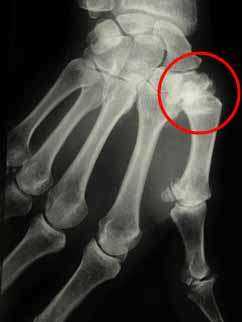
Rhizarthrosis is osteoarthritis of the base of the thumb. This condition is also called “trapeziometacarpal osteoarthritis.” It corresponds to chronic cartilage wear between the trapezium (a wrist bone) and the first metacarpal (thumb bone).
It is a very common form of osteoarthritis, particularly in women. Rhizarthrosis generally begins around the age of 50. It may also occur following trauma or a fracture. Another common form of osteoarthritis is finger osteoarthritis, which affects the joints of the other fingers.
In some cases, rhizarthrosis may be well tolerated. In others, it causes disabling pain in daily life and progressively leads to a Z-shaped deformity of the thumb column. Medical or surgical treatment is then indicated.
Clinical examination
The diagnosis of rhizarthrosis is first made through patient history and physical examination. Pain is found when pressing on the base of the thumb or during manipulation.
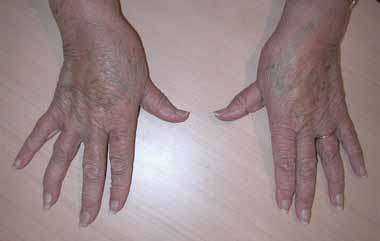
In more advanced forms, there is a loss of opening of the first web space as well as a Z-shaped deformity with hyperextension of the joint between the first metacarpal and the first phalanx.
An X-ray assessment is requested to confirm the diagnosis of rhizarthrosis.
Rhizarthrosis is often a bilateral condition (affecting both thumbs).
Medical treatment of rhizarthrosis
Initially, treatment for rhizarthrosis is usually medical. Painkillers and anti-inflammatory medications may be prescribed.
A resting splint or orthosis may be worn at night.
One or more corticosteroid injections into the joint may be proposed to relieve pain.
If medical treatment fails, surgery may then be proposed. I mainly use two types of procedures to treat rhizarthrosis: trapeziectomy with ligament reconstruction or minimally invasive arthroscopic surgery.
Trapeziectomy with ligament reconstruction
Summary:
- Duration : 1-night hospital stay
- Anesthesia : regional (only the arm is numbed)
Indication:
The trapeziectomy with ligament reconstruction technique is the procedure most frequently used by Dr. Philippe Roure for the surgical treatment of rhizarthrosis. This operation provides a definitive result, with disappearance or major improvement of pain, stabilization of the deformity, preservation of range of motion, and no limitation of manual or sports activities.
Principle of trapeziectomy
The operation involves making an incision along the outer edge of the wrist. The trapezium bone, whose joint surface is worn and deformed, is removed.
Part of the abductor pollicis longus tendon, located nearby, is then harvested to stabilize the base of the thumb and act as a “shock absorber.”
Postoperative care:
After surgical treatment of rhizarthrosis, immobilization with a splint must be maintained for 6 weeks. Initially, a rigid resin splint is applied immediately after surgery, then replaced by a custom-molded splint. This splint supports the base of the thumb and wrist while leaving the other fingers free. The fingers can still be used for daily activities while wearing the splint.
Rehabilitation begins after the 6-week immobilization period. It is necessary to restore range of motion.
Although the patient may gradually regain use of the hand after 6 weeks, the final result is generally achieved only after about 6 months. Tendonitis-related pain may persist during the first months following splint removal and the start of rehabilitation.
Minimally invasive arthroscopic surgery
Summary:
- Duration : outpatient surgery
- Anesthesia : regional (only the arm is numbed)
- Immobilization : splint for 2 to 3 weeks.
Indication
This minimally invasive arthroscopic surgical option may be proposed in early-stage rhizarthrosis that is painful, disabling, and insufficiently improved by medical treatment.
An arthroscopic procedure is particularly indicated for active patients who cannot tolerate prolonged immobilization.
Principle of the procedure
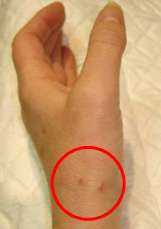
Two small incisions of a few millimeters allow the introduction of a camera and miniature instruments into the joint between the trapezium and the first metacarpal.
The friction areas where the articular cartilage is beginning to wear are smoothed down.
The joint capsule is then tightened where it has become lax. Inflamed membranes are removed.
Expected outcome
After surgery, immobilization for 10 to 15 days is required. Daily activities can then gradually be resumed, possibly combined with a rehabilitation program.
Improvement compared with the preoperative condition may take 2 to 3 months. It should be noted that the result is generally not permanent, since the trapezium is preserved during arthroscopic surgery.
Because of the rapid recovery and minimal cosmetic impact, arthroscopic surgery may be an attractive alternative. In some cases, it may also postpone a more extensive procedure, with benefits lasting several years or even decades.
Possible complications after surgery for rhizarthrosis
Complications following surgical treatment of rhizarthrosis are rare, but always possible.
- The risk of local infection is low but must still be considered. In cases of complex regional pain syndrome (CRPS), a swollen, painful hand with stiffness may occur. Recovery may take several months. The occurrence of CRPS is unpredictable, and long-term stiffness and pain may persist.
- Radiating pain in the thumb or extending toward the wrist may persist for several months. This pain is usually related to associated tendonitis.
- In some patients, mobility may be difficult to recover and pain may persist.
- A tingling sensation (“pins and needles”) in the hand may be present before or after surgery. This is related to carpal tunnel syndrome. It should be noted that this phenomenon is not caused by the surgery: this syndrome is initially associated with thumb osteoarthritis itself.