Shoulder replacement surgery
Shoulder replacement surgery may be considered in cases of chronic shoulder pain with limited mobility, particularly for patients with advanced omarthrosis (osteoarthritis of the shoulder) or in cases of failure of medical treatment.

Contents:
Shoulder arthritis (omarthrosis)
The shoulder allows the arm, meaning the humerus, to articulate with the shoulder blade (scapula). At this shoulder joint, the articular surfaces of both bones are covered with cartilage, allowing smooth and harmonious movement between them.
This cartilage may progressively wear down and deteriorate, a condition known as arthritis (or omarthrosis in the shoulder).
Cartilage may also deteriorate rapidly following trauma or a fracture. Certain inflammatory diseases such as rheumatoid arthritis may also progressively destroy the joint cartilage.
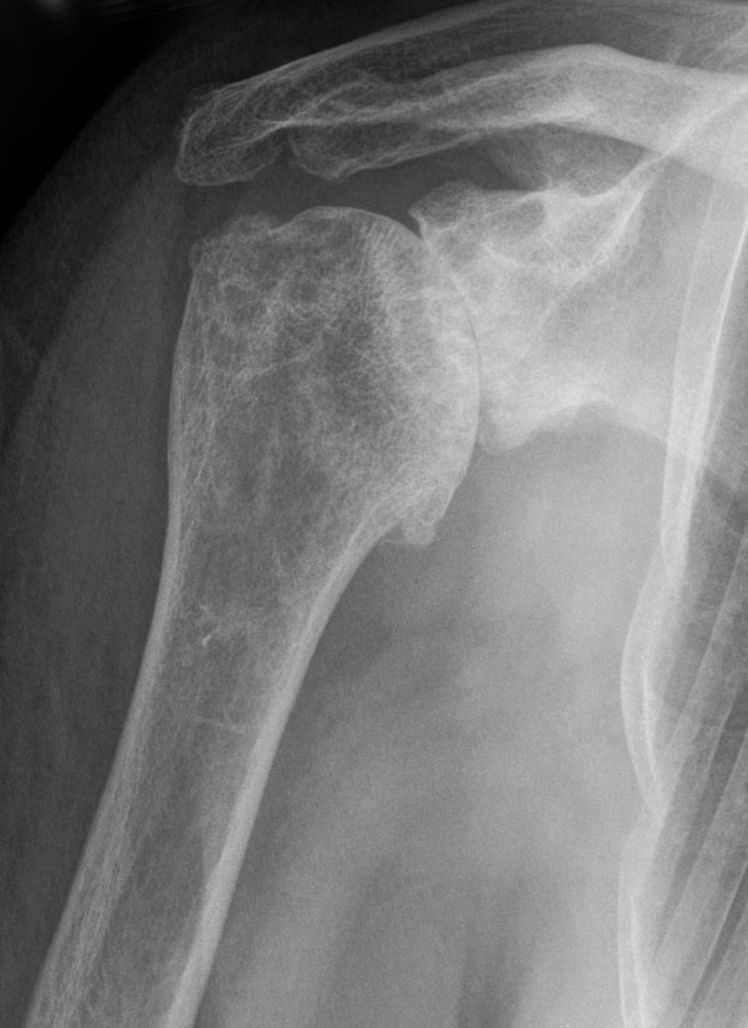
This cartilage wear is also associated with changes and deformation of the underlying bone, affecting both the scapula and the humerus.
Shoulder arthritis therefore causes pain and reduced mobility, which gradually worsen over time. It becomes increasingly difficult to use the arm in daily activities, professional tasks, or sports.
Treatment is generally initially conservative, including anti-inflammatory medication, painkillers, corticosteroid injections, viscosupplementation, or even PRP injections.
If symptoms fail to improve sufficiently, shoulder replacement surgery may then be recommended.
> Learn more about shoulder arthritis
What is a shoulder replacement?
A shoulder replacement involves replacing the worn joint surfaces of the two bones forming the shoulder joint with artificial components, while reproducing the mechanics of the natural joint.
Shoulder prostheses are made from metal alloys, generally titanium or cobalt-chromium, combined with polyethylene. These materials are biocompatible, meaning that allergic reactions or intolerance are extremely rare.
There are different types of shoulder prostheses. During your consultation, Dr. Roure will explain their differences and recommend the prosthesis best suited to your condition.
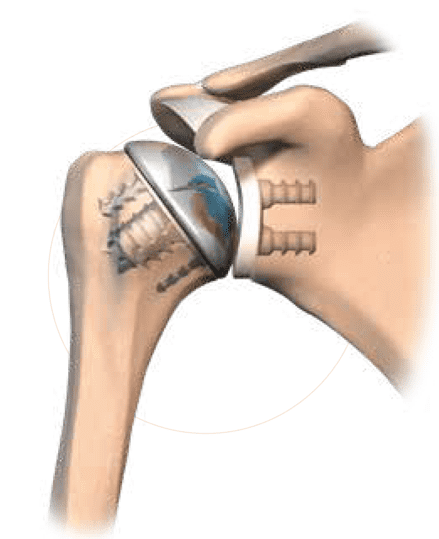
Anatomic total shoulder replacement
Hemiarthroplasty (partial shoulder replacement)
Only the humeral head is replaced with a partial shoulder prosthesis. This type of implant is indicated when only the humeral side of the joint is damaged (fracture of the humeral head, avascular necrosis, etc.).
Anatomic total shoulder replacement
An anatomic total shoulder replacement reproduces the natural anatomy of the shoulder. It is indicated when the tendons and muscles surrounding the shoulder joint remain intact.
Reverse total shoulder replacement
This type of prosthesis modifies the original anatomy of the shoulder. The spherical component is attached to the scapula rather than the humerus, reversing the joint configuration. A reverse total shoulder replacement allows the shoulder to function despite damage to, or a tear of the rotator cuff tendons surrounding the joint. It is therefore preferred in these situations.
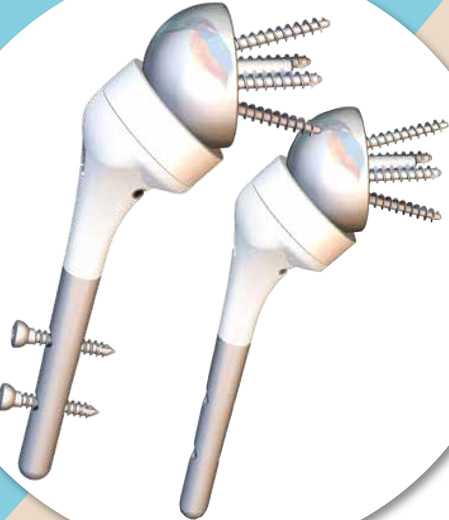
Reverse total shoulder replacement
When should shoulder replacement surgery be considered?
Shoulder replacement surgery is recommended in cases of chronic shoulder pain associated with loss of mobility. It should also be considered after failure of conservative treatment, including physiotherapy and injections.
In cases of arthritis with preserved rotator cuff tendons and muscles, an anatomic total shoulder replacement is generally recommended.
In cases of arthritis associated with rotator cuff tendon damage or irreparable tears causing chronic pain, a reverse total shoulder replacement is preferred.
Shoulder replacement surgery may also be indicated immediately following certain fractures involving the humeral head.
Shoulder replacement surgery
Summary:
- Anesthesia: General anesthesia, possibly combined with regional anesthesia
- Procedure duration: Approximately 1.5 hours
- Hospital stay: 2 to 3 nights
- Immobilization period: Between 1 month and 6 weeks
Before surgery
Shoulder replacement surgery naturally requires an operation performed under anesthesia through an incision around the shoulder. The procedure is carried out under general anesthesia, sometimes combined with regional anesthesia.
The surgery is carefully planned beforehand together with the anesthesiology team, including a complete preoperative assessment to minimize complications and ensure the patient is medically fit for surgery.
A preoperative evaluation generally includes blood tests, dental, cardiovascular, and urinary assessments. Imaging studies such as X-rays, CT scans, or MRI scans are also requested by the surgeon beforehand.
Surgical procedure
Shoulder replacement surgery typically lasts approximately 1.5 hours.
At the beginning of the procedure, the surgeon makes an incision at the front or side of the shoulder. The muscles are then gently separated to access the joint.
The damaged humeral head is removed, along with the worn cartilage covering the glenoid, which is the socket portion of the scapula.
The bone surfaces are then prepared to allow placement of the two prosthetic components, which will articulate together to recreate the shoulder joint.
The surgeon finally tests the shoulder to ensure proper function and stability of the new joint.
Postoperative recovery
The dressing applied after surgery must be changed every two days by a nurse for approximately 2 weeks.
The arm is placed in a sling for approximately 6 weeks. However, the sling may be removed during the day while resting, provided the elbow remains close to the body and heavy lifting or repetitive movements are avoided. The hand and elbow may still be used during recovery.
Physical therapy may take place in a private clinic or rehabilitation center. Depending on the individual case, rehabilitation generally begins between 1 and 4 weeks after surgery.
Driving is generally possible again after approximately 2 months. Depending on the sport, athletic activities may be resumed after 2 to 5 months.
Regular follow-up appointments including X-rays will then be scheduled with Dr. Roure.
Possible risks after shoulder replacement surgery
- The risk of complex regional pain syndrome (CRPS) is rare but possible, as with any surgical procedure.
- Shoulder stiffness may occur. Rehabilitation therefore plays a major role after shoulder replacement surgery.
- A hematoma, meaning accumulation of blood within the joint, may rarely occur and sometimes requires additional surgery for drainage.
- The risk of infection is uncommon but serious, as it may require revision surgery with removal and replacement of the prosthesis, along with prolonged antibiotic treatment.
- Nerve complications during shoulder replacement surgery are rare but remain possible.
- Dislocation of the prosthesis is uncommon but may occur. Manipulation under anesthesia or revision surgery to modify the prosthetic components may then be required.
What results can be expected from a shoulder replacement?
In the long term, the results of shoulder replacement surgery are generally very satisfactory for patients. After recovery, most patients experience complete disappearance or major improvement of pain.
However, shoulder prostheses do not allow patients to recover the full range of motion of a completely normal shoulder. This limitation is especially noticeable with reverse shoulder replacements. Nevertheless, the movements required for everyday activities are generally well restored.
The average lifespan of shoulder prostheses is approximately 20 years for anatomic prostheses and around 15 years for reverse prostheses.