Acromio-clavicular arthrosis
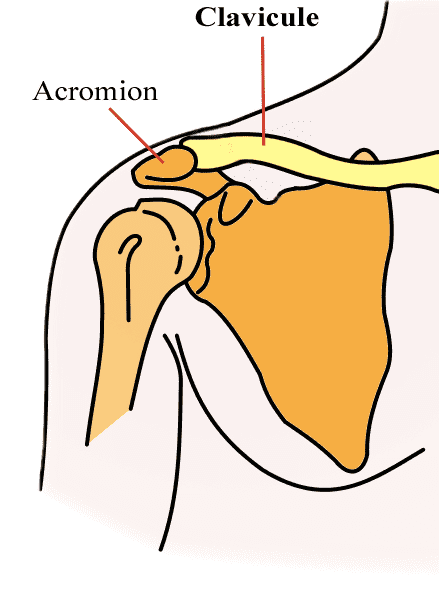
This is a wearing down of the joint between the outer edge of the collar bone and the acromion, i.e. the upper section of the shoulder blade. This may be caused by repetitive work-related movements, DIY or sports activities. It is not a serious lesion but can lead to disabling pain with restriction of the shoulder function.
Contents :
Diagnosis of acromioclavicular osteoarthritis
What is acromioclavicular osteoarthritis?
Located on the top of the shoulder, the acromioclavicular joint allows the connection between the outer end of the clavicle and the acromion, a bony prominence forming the upper edge of the scapula. Strong ligaments make this joint particularly stable.
Repetitive movements, related to work activities, DIY tasks, or sports, can progressively wear down the cartilage of the acromioclavicular joint. This wear may progress to complete cartilage destruction, leading to direct bone-on-bone contact between the outer clavicle and the acromion.
Cartilage damage may also result from shoulder trauma, particularly a fall causing a sprain or dislocation of the acromioclavicular joint.
Acromioclavicular osteoarthritis is a benign condition. However, it can cause significant pain and limitation of shoulder function.
Symptoms of acromioclavicular osteoarthritis
Pain is the main symptom of acromioclavicular osteoarthritis. It is usually located over the joint, on the top of the shoulder, which may appear swollen. The pain often radiates toward the trapezius muscle and the arm.
Pain is typically worsened by movements above shoulder level, or by adduction movements across the body (when the hand moves toward the opposite shoulder).
Night pain may occur when lying on the affected side.
Clinical examination
Diagnosis of acromioclavicular osteoarthritis is made during a medical examination. The physician identifies tenderness on palpation of the joint and pain during specific movements, particularly when placing the hand over the opposite shoulder.
Additional imaging tests are usually required: X-rays, and in some cases CT scan or MRI.
Treatment of acromioclavicular osteoarthritis
Medical treatment
Initially, treatment is conservative. The physician prescribes painkillers and anti-inflammatory drugs. This medical treatment may also involve modifying sports or occupational activities, as well as rest.
A corticosteroid injection into the acromioclavicular joint may be performed. This intra-articular injection is guided by ultrasound or X-ray to ensure accurate placement.
Surgical treatment of acromioclavicular osteoarthritis
If significant pain persists, surgical treatment may be proposed.
Surgery is considered when pain leads to a clear loss of shoulder function and significantly impacts daily life or sports activities.
Surgery is not mandatory or urgent for treating acromioclavicular osteoarthritis. The decision depends on pain tolerance and its impact on the patient’s quality of life.
Surgery for acromioclavicular osteoarthritis
Principle of the procedure
The procedure consists of removing the outer end of the clavicle (about 1 cm). This eliminates friction between the worn cartilage of the clavicle and the acromion.
The procedure can be performed by arthroscopy or through an open approach (a small incision is made on the top of the shoulder).
Surgical procedure
The surgery may be performed using arthroscopy, following similar techniques to rotator cuff surgery. Arthroscopic treatment is particularly indicated when acromioclavicular osteoarthritis is associated with a rotator cuff lesion.
In cases of isolated acromioclavicular osteoarthritis, an open procedure may also be used. A small incision is made on the top of the shoulder to remove the lateral end of the clavicle and eliminate the joint conflict.
Summary: acromioclavicular osteoarthritis surgery
- Type of surgery: arthroscopic or open.
- Anesthesia: general or regional in some cases.
- Hospital stay: outpatient or 1 night hospitalization.
- Immobilization: arm sling for 2 to 4 weeks.
Postoperative recovery
Immobilization
An arm sling is worn for 2 to 4 weeks. The hand remains free and functional. Basic daily activities can usually resume immediately after returning home.
Rehabilitation
Initially, a self-rehabilitation program begins on the second day after surgery. This program is explained by the physiotherapist during hospitalization.
Later, active physiotherapy begins about one month after surgery.
Sports activities involving the shoulder can usually resume around two months after surgery.
Results of surgery for acromioclavicular osteoarthritis
Results are not immediate after surgery. Pain and stiffness may persist for several months. However, pain usually improves significantly after about three months.
Return to full sports activity is generally possible.
Possible complications
Risks are low but always possible, as with any surgical procedure.
- In cases of significant degenerative changes, persistent pain and stiffness may remain.
- Complex regional pain syndrome may occur, causing a painful and stiff shoulder with symptoms lasting several months. Its occurrence is unpredictable and may lead to long-term stiffness and pain.
- Infection risk: septic arthritis is rare but possible and may require treatment or revision surgery.
- Hemarthrosis: joint bleeding leading to swelling, which may require surgical evacuation.
- Depending on skin type, inflammatory scar healing may occur.