Scaphoid pseudarthrosis - Scaphoid non-union
Scaphoid nonunion is the failure of a scaphoid fracture to heal. This nonunion will progressively lead to the destruction of the entire wrist joint. To prevent this progression, surgical intervention is necessary: screw fixation, bone grafting, or scaphoidectomy.

Summary :
Diagnosis of scaphoid non-union
What is the scaphoid?
The scaphoid is one of the eight carpal bones of the wrist. Located in line with the thumb column, the scaphoid lies on the outer side of the first row of carpal bones.
The scaphoid plays an essential functional role in wrist mobility and function. It contributes to wrist flexion, extension, and lateral deviation movements.
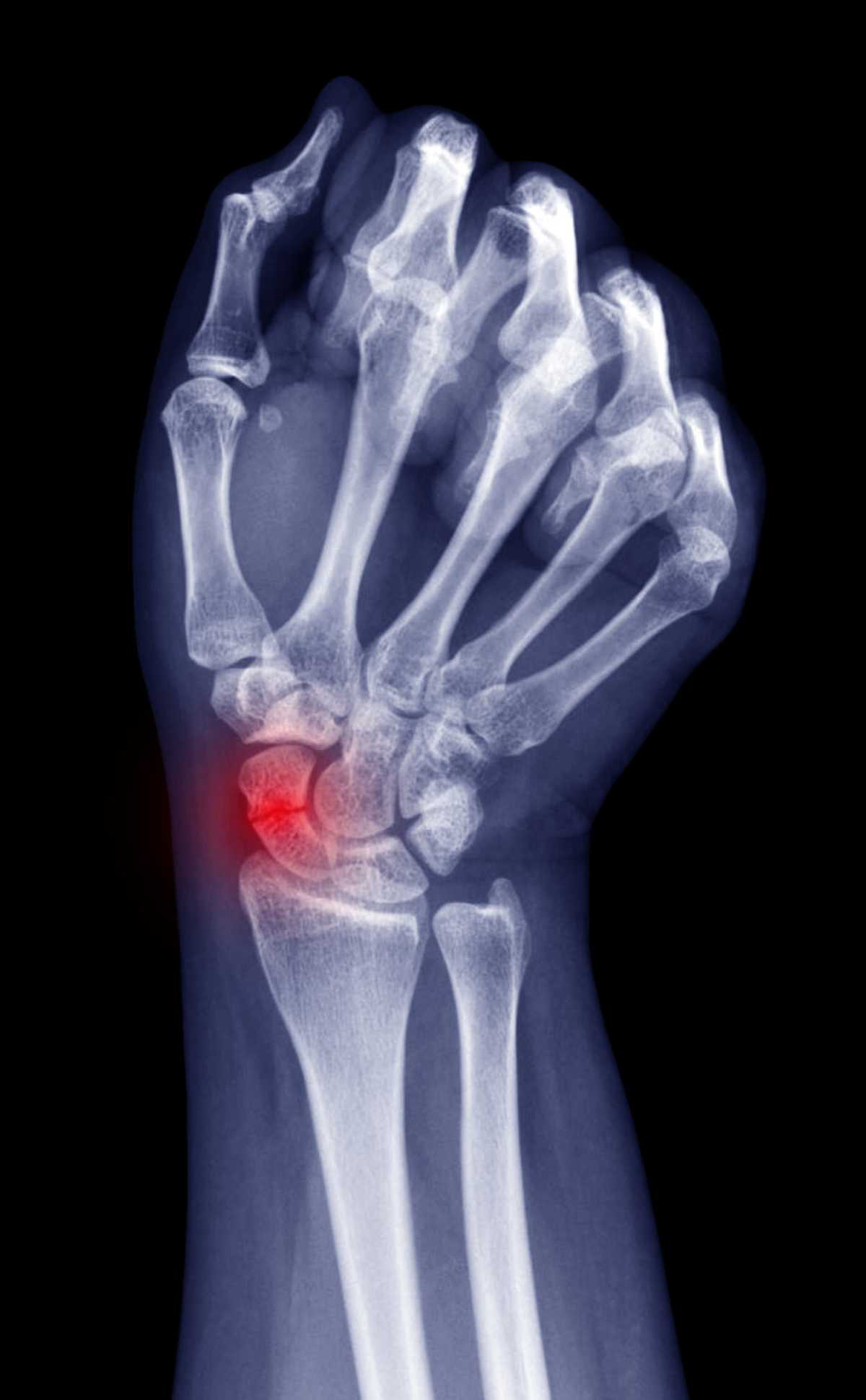
What is scaphoid non-union?
Scaphoid non-union refers to the failure of healing after a scaphoid fracture. This non-union progressively leads to destruction of the entire wrist joint.
Scaphoid non-union results in pain and swelling of the wrist.
Progressive loss of mobility is also observed, leading to inability to use the wrist normally.
Risks of untreated scaphoid non-union
Without treatment, scaphoid non-union leads to progressive stiffness and pain, eventually preventing wrist function.
A procedure to completely fuse the wrist joint may then become necessary. This is called a radiocarpal arthrodesis.
The goal of early and appropriate management is therefore to prevent progression toward permanent functional disability.
Imaging studies
When a fracture is known, diagnosis is primarily radiological, based on lack of bone healing.
A CT scan (with or without contrast) or an MRI may be performed for further evaluation.
When no initial fracture was diagnosed, non-union may present with gradually increasing pain and loss of mobility. This situation is unfortunately common, as a scaphoid fracture may not always be painful. X-rays performed during the evaluation of wrist pain then confirm the diagnosis.
Scaphoid non-union: medical or surgical treatment?
Medical treatments commonly used for upper limb conditions (immobilization, physiotherapy, injections) are not effective for scaphoid non-union. Treatment is exclusively surgical.
There are four surgical techniques to treat scaphoid non-union:
- Compression screw fixation
- Iliac bone graft
- Vascularized bone graft
- Scaphoid removal
The choice of procedure depends on the stage of the condition. Options are discussed during the consultation. The surgeon will explain the advantages and disadvantages of each technique and select the most appropriate option for the patient.
Compression screw fixation
Principle
Compression screw fixation involves placing a compressive screw inside the bone. A small incision is made over the scaphoid under imaging guidance. The screw stabilizes and compresses the non-union site to achieve bone healing, similar to fracture fixation.
Indications
This technique is used in early-stage scaphoid non-union. It has the advantage of causing very little postoperative pain.
Postoperative care
Postoperative care includes wrist splint immobilization for a few weeks.
The splint can be removed during the day, except during repetitive or forceful activities.
Iliac bone graft
Principle of the procedure
The iliac bone graft procedure involves removing fibrous non-healed bone at the fracture site and replacing it with a bone graft.
The procedure begins with removal of fibrous tissue at the scaphoid non-union site via a short incision on the front of the wrist.
A bone graft is then harvested from the iliac crest (pelvis) through a small incision. The graft is shaped to fit the defect and inserted into the scaphoid. Fixation is achieved using pins (removed after approximately 6 weeks) or a screw.
Indications
This is the most common technique for scaphoid non-union, used when surrounding wrist bones are not affected and when the scaphoid still has sufficient vascularity.
Postoperative care
Immobilization lasts approximately 6 weeks and may extend up to 3 months in case of delayed healing.
Walking is allowed immediately after surgery.
Summary
- Indication: no involvement of surrounding wrist bones
- Anesthesia: local or general
- Hospital stay: 1 night
- Immobilization: 6 weeks to 3 months
Vascularized bone graft
This technique is indicated after failure of iliac bone grafting or when the scaphoid appears poorly vascularized.
An anterior wrist incision is extended proximally. A bone segment is harvested from the radius along with its artery and vein to ensure continuous blood supply. The graft is implanted into the scaphoid after removal of fibrous tissue and fixed with pins or screws.
Postoperative care
Immobilization lasts about 6 weeks, and may extend up to 3 months if healing is delayed.
Summary
- Indication: failure of iliac graft or poor vascularity
- Anesthesia: local or general
- Hospital stay: outpatient or 1 night
- Immobilization: 6 weeks to 3 months
Scaphoid removal (scaphoidectomy)
Indications
Scaphoidectomy is generally considered a last-resort procedure, used after failure of grafting techniques or in advanced cases with significant wrist arthritis.
Procedure
Scaphoid removal cannot be performed alone. Two main options exist depending on cartilage condition:
- Proximal row carpectomy: removal of the scaphoid, lunate, and triquetrum. The capitate then articulates with the radius. This preserves a functional wrist but reduces flexion/extension and grip strength.
- Four-corner fusion: removal of the scaphoid followed by fusion of the remaining carpal bones using a plate and screws. The wrist becomes a stable bony block articulating with the radius.
Postoperative care
Scaphoidectomy procedures are reserved for severe cases where other treatments have failed.
They reliably reduce pain and prevent further deterioration, but result in reduced wrist mobility, especially in flexion and extension, and possible loss of strength.
Immobilization lasts approximately 6 weeks.
Summary
- Indication: failure of previous treatments or advanced disease
- Anesthesia: local or general
- Hospital stay: 1 night
- Immobilization: 6 weeks